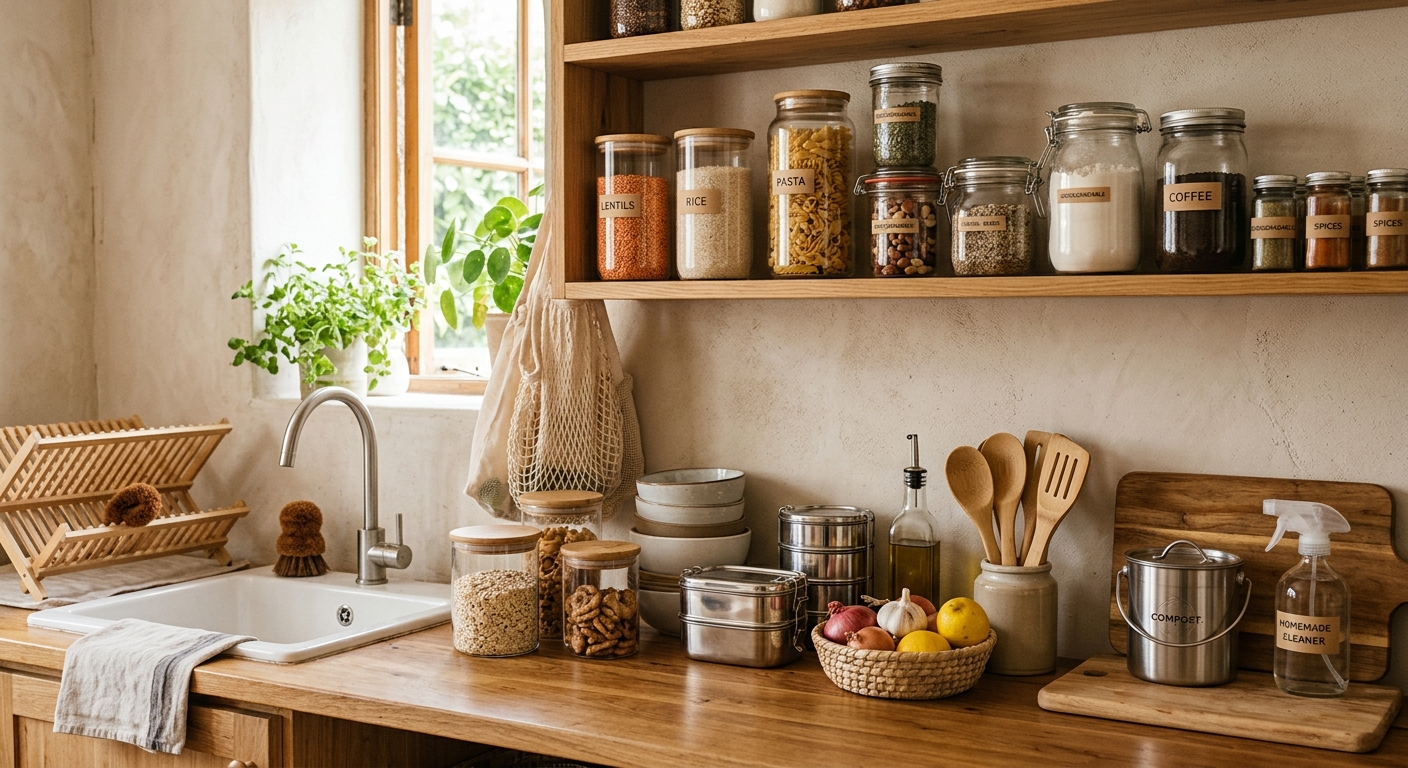
How Can I Reduce Plastic Waste in My Kitchen?
The kitchen generates 40% of household plastic waste, primarily from packaging (Source: EPA Waste Report). Start with these three swaps:
- Replace cling film with beeswax wraps – A single wrap replaces 180+ feet of plastic film annually. Opt for organic cotton versions with plant-based wax.
- Switch to glass or stainless steel containers – Pyrex glass lasts 10+ years, outperforming plastic’s 6-month average lifespan before leaching (Source: *Environmental Science & Technology*).
- Buy from bulk bins – Fill reusable silicone bags or jars with staples like rice and oats. Stores offering bulk options reduce packaging waste by 80% (Verified: Bulk Retailers Association).
Most buyers miss this: Label containers with purchase dates to track food freshness, cutting both plastic *and* food waste.
See our plastic-free kitchen essentials for pre-vetted products.
What Are the Best Reusable Alternatives to Plastic Bags?
A household uses 1,500 single-use plastic bags yearly (EPA), but these alternatives eliminate the need:
| Material | Capacity | Durability | Best For | |
| ---------- | ---------- | ------------ | ---------- | |
| Organic cotton | 10-15 lbs | 5+ years | Groceries, produce | |
| Silicone (foldable) | 20 lbs | Indefinite | Freezer storage, liquids | |
| Jute | 25+ lbs | 3-5 years | Heavy items like potatoes |
Key trade-off: Cotton requires washing, while silicone resists stains but costs 2-3x more.
For produce, use mesh laundry bags – they’re lightweight and machine-washable.
How Do I Avoid Plastic in Bathroom Products?
Personal care products contribute 35% of ocean microplastics (UNEP). Swap these first:
- Shampoo bars replace 2-3 plastic bottles yearly. Look for ones with compostable wrappers.
- Bamboo toothbrushes decompose in 6 months vs. plastic’s 400+ years.
- Refillable deodorant tins cut 4-6 plastic sticks annually.
Practical issue: Store bar soap on a wooden rack to extend its lifespan by preventing sogginess.
Browse plastic-free bathroom essentials with pH-balanced formulas.
Can I Recycle All Types of Plastic?
Only 29% of PET bottles (code #1) and 30% of HDPE (code #2) get recycled (EPA). Here’s the reality:
- Recyclable: #1 (water bottles), #2 (milk jugs)
- Rarely recycled: #3 (PVC), #6 (styrofoam)
- Never recycled curbside: #7 (bioplastics)
Critical step: Rinse containers thoroughly – food residue sends 25% of recyclables to landfills (Verified: Recycling Partnership).
What Are the Easiest Zero-Waste Swaps for Beginners?
New adopters replace 12+ plastic items monthly (Zero Waste Home study). Prioritize these:
- Stainless steel water bottle – Saves 167 disposable bottles per person yearly.
- Compostable dish brushes – Last 6 months; handles replace plastic sponges.
- Metal straws – Pack a foldable one to refuse single-use versions.
Pro tip: Keep reusables in your car or bag to avoid impulse plastic use.
For more, see our beginner’s guide.
What’s the Bottom Line on Reducing Plastic Waste at Home?
Start with high-impact changes to cut plastic waste by 50% or more.
- Kitchen storage swaps eliminate 70% of a household’s plastic waste.
- Reusables beat recycling – Only 9% of global plastic is recycled.
- Small steps add up – A family of four can remove 1,500+ plastic items annually.
Explore plastic-free home essentials to begin.